
Inside Canada’s $3.8 Billion Environmental Strategy—the Largest Indigenous-Led Conservation Effort in the World
Turns out, it's not hyperbole. It's real policy and systemic change that's already underway.

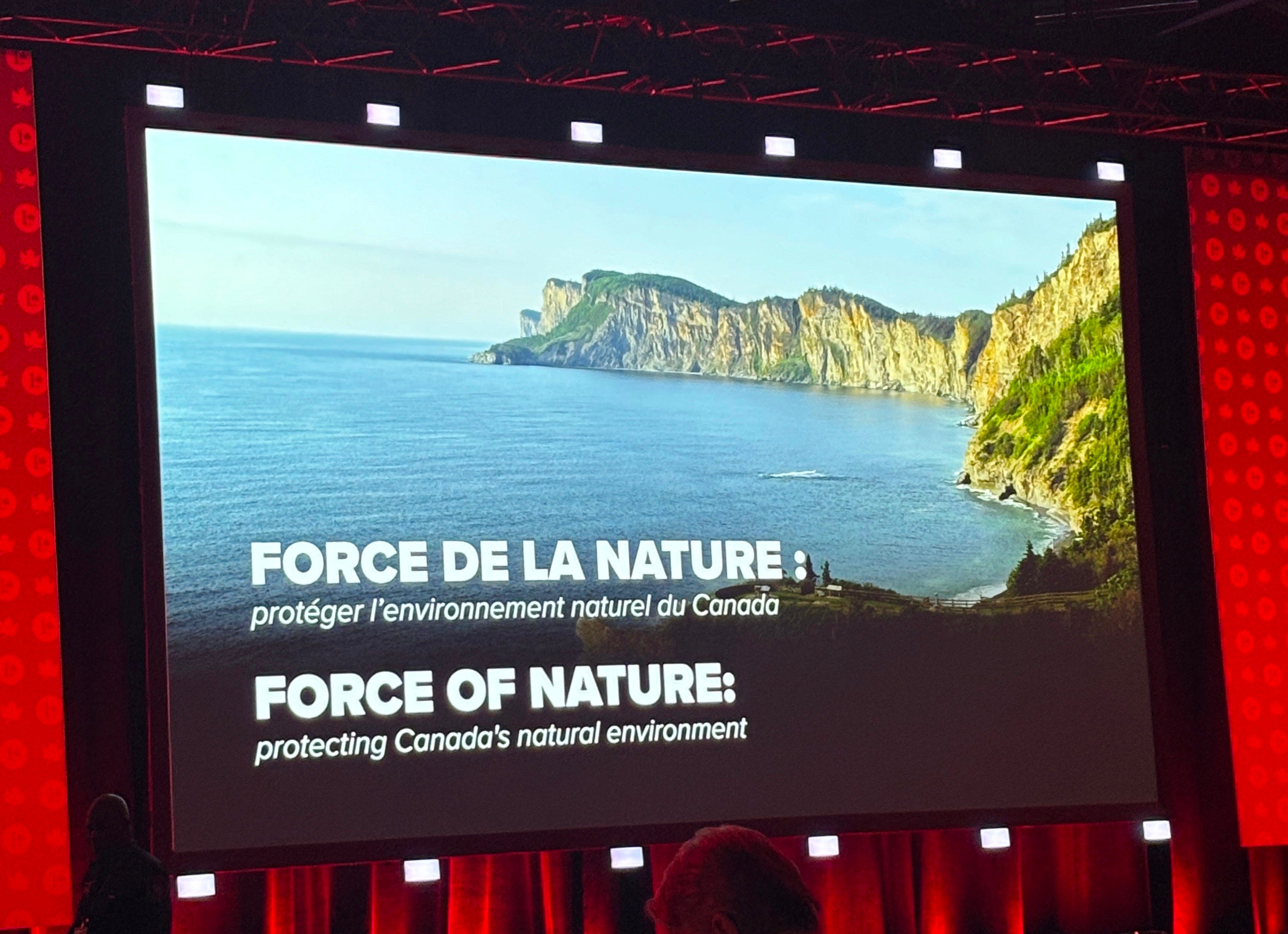
Last weekend in Montréal, I sat in a packed room at the 2026 Liberal Policy Convention, listening to a panel titled “Force of Nature: Protecting Canada’s Natural Environment.” The panel brought together voices from across government and policy—Nathalie Provost, Julie Dabrusin, Rebecca Alty, Joanne Thompson, Wade Grant, and Shannon Miedema. What emerged was a multi-layered vision of Canada’s new environmental direction—ambitious, complex, and most notably, Indigenous-led.
It felt like witnessing a country attempt something rare: a fundamental shift in how it culturally and politically relates to its land, water, and the people who have stewarded it for generations.
Because at the heart of Canada’s new Force of Nature strategy is something unprecedented in scale.
And I filled pages of notes.
Not because the ideas were “values-driven”, abstract, idealistic promises—but because they weren’t.
Here’s one of the first lines I wrote down, somewhat incredulously:
“Largest Indigenous-led conservation program in the world.”
At the time, it felt like a bold, potentially hyperbolic claim.
By the end of the panel, it felt like the central truth of everything I had just heard.
The Scale of the Moment
Canada’s newly launched “Force of Nature” strategy is not a single policy or political vision to campaign on—it’s a national framework backed by $3.8 billion in federal investment, designed to reshape how the country approaches conservation, biodiversity, and climate resilience.
At its core, the strategy is built around three pillars:
Protecting and restoring ecosystems
Ensuring development aligns with conservation
Mobilizing both private and public capital for nature
But it’s the scale that makes it impossible to ignore.
Over the next four years, the federal government aims to:
Protect 1.6 million square kilometres of land
Protect 700,000 square kilometres of ocean
Double protected areas to reach 30% of land and water by 2030
To put that into perspective, Canada is attempting one of the largest conservation expansions on the planet—at a pace aligned with global biodiversity targets agreed upon in Montréal just a few years ago.
This is not incremental policy.
It is structural change.
What the Money Is Actually Funding
One of the most valuable parts of the panel wasn’t the vision—it was the specifics.
Where is the money going?
1. New Protected Areas and Parks
Through Parks Canada and federal partnerships, funding is being directed toward:
10+ new national parks
Up to 14 marine protected areas
10 marine conservation areas
15 national urban parks
Among the projects already underway:
Seal River Watershed National Park Reserve (Manitoba)
One of the largest intact boreal ecosystems remaining in the worldWiinipaakw Indigenous Protected Area (James Bay)
A major Indigenous-led marine conservation initiative
There was also discussion about expanding marine protections in northern regions, including Nunavut, aligning with new conservation planning in and around Iqaluit.
2. Indigenous-Led Conservation at Scale
This is where the strategy shifts from ambitious to globally significant.
Canada is investing:
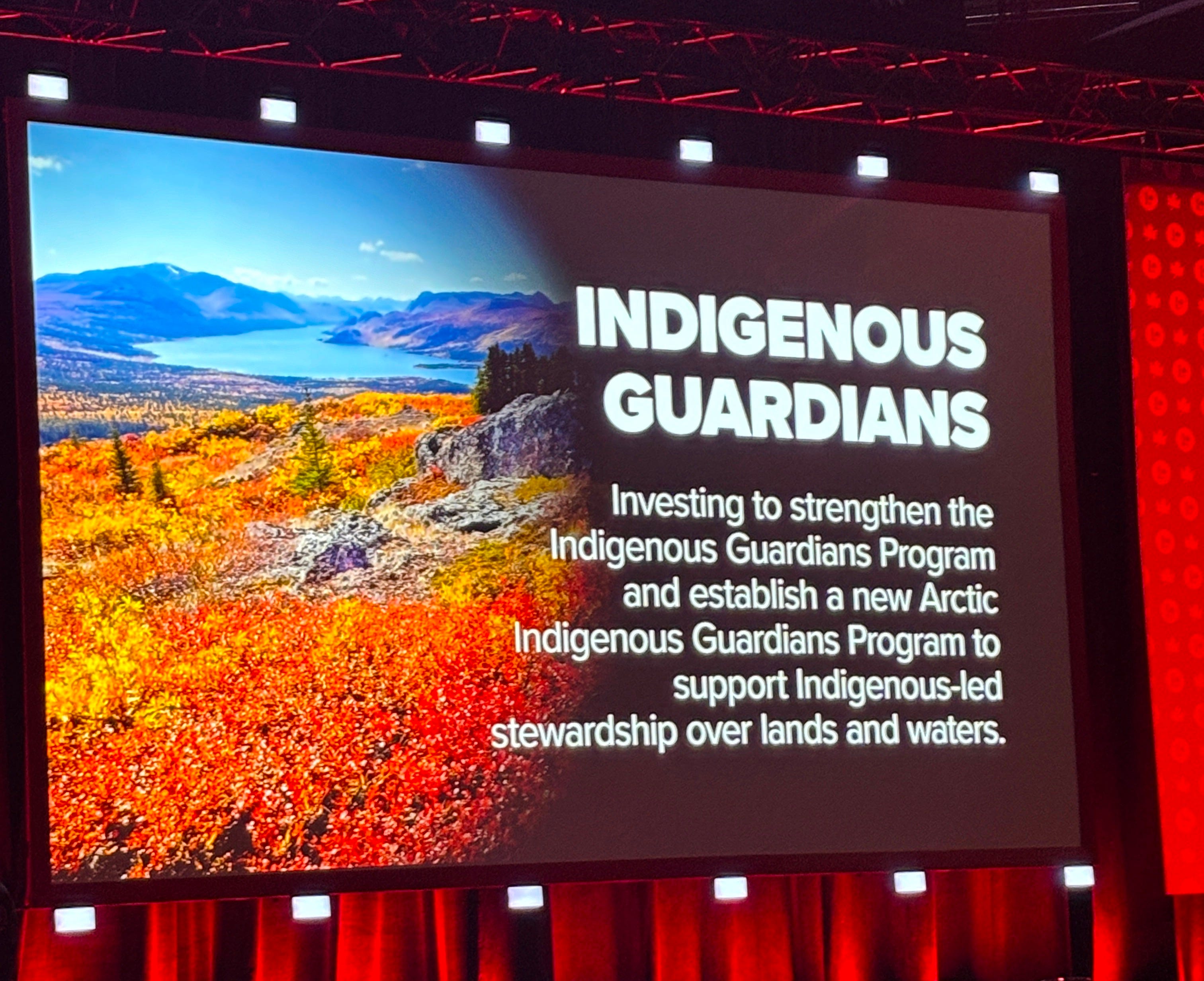
$1.63 billion toward Indigenous stewardship and conservation
Over $230 million to expand Indigenous Guardians programs
This includes:
Expansion of Guardians programs in the Northwest Territories
A new Arctic Indigenous Guardians initiative
These programs are not symbolic.
They are operational.
Guardians:
Monitor ecosystems in real time
Enforce conservation protections
Steward land through Indigenous law and knowledge systems
What I wrote in my notes—“largest Indigenous-led conservation program in the world”—was not an exaggeration.
It is the direction Canada is actively building toward.
And more importantly, it represents a shift in power:
Not consultation.
Not inclusion.
Governance.
WATCH OUR EPISODE ON THIS TOPIC FOR A MORE IN-DEPTH ANALYSIS:
3. Species Recovery and Biodiversity Protection
The strategy also targets urgent ecological crises with direct funding:
$410+ million for Pacific salmon restoration
$80+ million for Atlantic salmon
$283 million for species at risk
$90 million for wood bison recovery
These investments connect directly to both ecological and economic realities.
As was emphasized during the panel, species like salmon are not just environmental concerns—they are foundational to entire regional economies.
Beyond species, funding is also directed toward:
Restoring carbon-rich peatlands
Protecting old-growth forests
Expanding biodiversity mapping and ecological data systems
This is where conservation intersects directly with climate strategy.
4. Real Projects, Real Impact
Some of the most tangible examples are already visible.
One that stood out in particular:
Nearly $1 million invested in Rouge National Urban Park (Toronto)
Restoration of 23 hectares across 13 sites
Improvements to watershed health, flood resilience, and biodiversity
This is what the strategy looks like on the ground:
Local.
Measurable.
Immediate.
Nature as Economic Infrastructure
A recurring theme—both in the panel and in federal messaging—is a reframing of nature itself.
Not as a passive asset.
But as economic infrastructure.
Canada holds:
20% of the world’s freshwater
37% of global lakes
25% of wetlands
24% of boreal forests
These ecosystems are not just environmental—they are functional systems that:
Reduce flood damage
Mitigate wildfire risk
Stabilize soil and coastlines
Lower long-term disaster costs
Even in direct economic terms:
Parks Canada contributes over $4 billion annually to GDP and supports approximately 37,000 jobs.
But this is also where tension exists.
Some critics warn that framing nature primarily through economics risks aligning conservation too closely with industrial development.
That tension was present in the room—subtle, but unmistakable.
Freshwater, Energy, and the North
Another theme that surfaced repeatedly in my notes:
Canada’s freshwater is a strategic resource—and it’s vulnerable.
With 20% of the world’s freshwater supply, a new national freshwater strategy aims to:
Strengthen watershed protection
Coordinate governance across provinces
Build climate resilience into water systems
At the same time, the conversation turned toward energy—particularly in remote and northern communities.
There is a clear push to transition away from diesel toward:
Hydroelectric systems
Solar and wind energy
Tidal power in coastal regions
This aligns with what I noted during the panel:
Energy, climate, and sovereignty are deeply interconnected in northern and Inuit communities.
Climate Is Not Equal Across Canada
One of the most grounded and honest moments of the discussion came when panelists acknowledged a reality often overlooked:
“Coastal communities see the impact of the climate crisis first.”
Northern and coastal regions are already experiencing:
Rising sea levels
Rapid ecological shifts
Infrastructure instability
And with that comes a necessary shift in policy thinking:
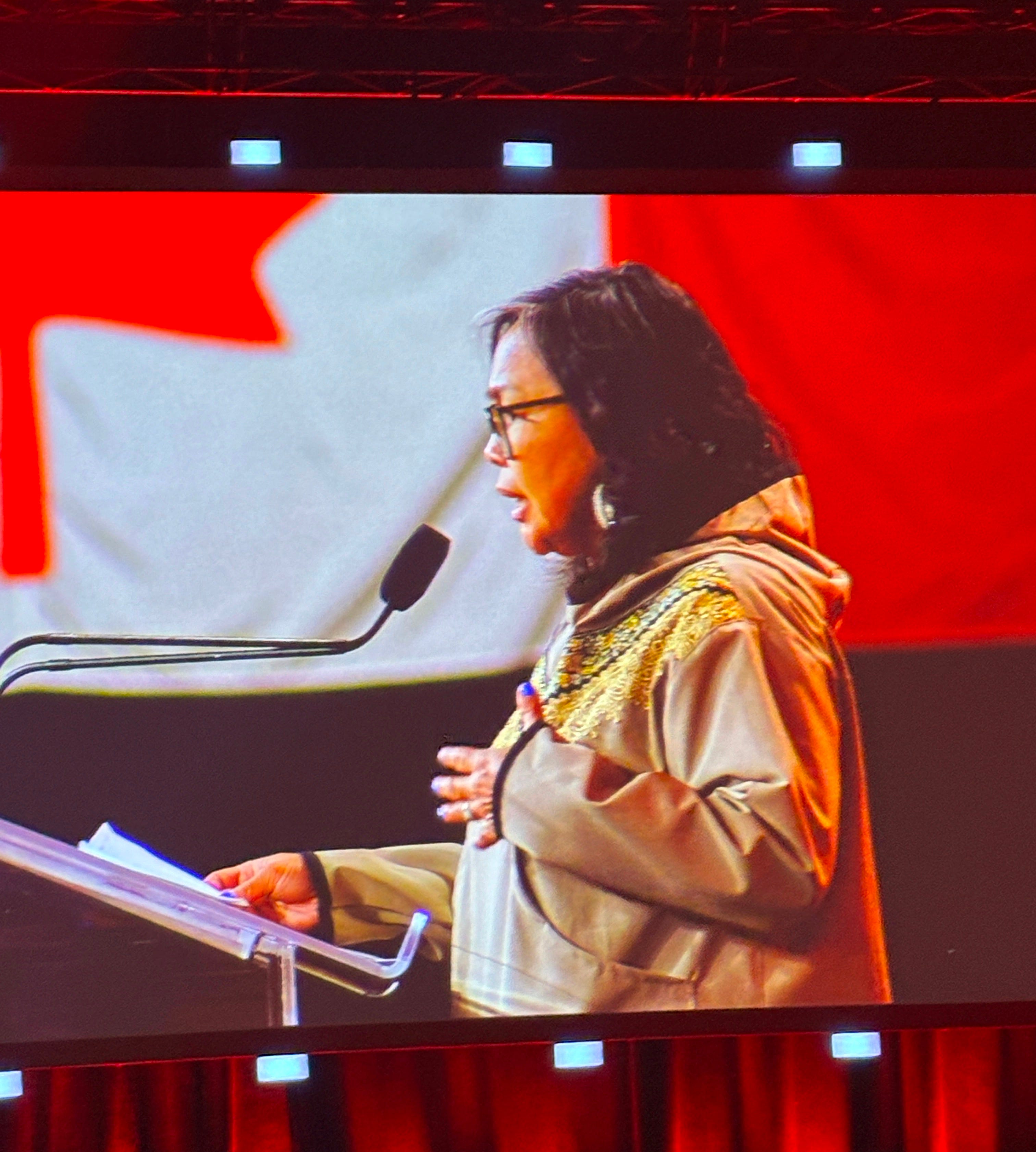
Inuit climate knowledge must be integrated into decision-making
Climate solutions must reflect lived experience—not just models
This was not framed as optional.
It was framed as essential.
Accessing Nature: The Canada Strong Pass
As conservation expands, so does access.
Programs like the Canada Strong Pass, available through Parks Canada, are designed to make national parks and protected areas more accessible to the public.
Because conservation is not just about protection.
It’s about relationship.
And access plays a critical role in building that relationship.
Where This Leaves Us
Walking out of that panel, I didn’t feel like I had just listened to a policy discussion.
I felt like I had witnessed a country in transition.
The ambition is undeniable:
Millions of square kilometres protected
Billions of dollars invested
Governance shifting toward Indigenous leadership
But ambition is not the same as transformation.
The real question—the one I carried with me out into the Montréal streets—is this:
Can a country built on resource extraction learn to operate within ecological limits… without losing itself in the process?
Because this strategy doesn’t just ask Canada to protect nature.
It asks Canada to become something different.
And if that transformation happens—
It won’t be written in policy documents.
It will be written on the land itself.
Sources
A Force of Nature: Canada’s Strategy to Protect Nature
https://www.canada.ca/en/services/environment/nature/nature-strategy.html
Prime Minister Announces Canada’s New Nature Strategy and $3.8 Billion Investment
Canada’s Strategy to Protect Nature – Parks Canada Announcement
Environment Journal: Canada’s $3.8B Nature Strategy Analysis
Nature United: Canada’s Force of Nature Strategy Breakdown
https://www.natureunited.ca/newsroom/canada-force-of-nature-strategy/
Wilderness Committee: Critique of Canada’s Nature Strategy
Canada’s Protected Areas Generated $10.9 Billion in GDP, CPAWS Study Finds
https://cpaws.org/canadas-protected-areas-generated-billions-in-gdp/
Become A Podcast Channel Member for exclusive content, gift articles and more: https://www.youtube.com/channel/UCeUbzckOLocFzNeY1D72iCA/join
Join Bill’s LIVESTREAM every Thursday at 7 pm ET/4 pm PT on YouTube! Watch last week’s Livecast here: https://youtube.com/live/KVsYv1aaK5g?feature=share
Loved this - Indigenous-led. What could be better.
Thank you. Worth knowing and thinking about though I personally feel a little out of my depth on this especially as concerns the Arctic